
Reverse Osmosis Drinking Water Systems in Charlotte, NC
A reverse osmosis (RO) system sits under your kitchen sink and gives you purified water from its own faucet for drinking, cooking, coffee and ice. It removes far more than a carbon filter can, including most dissolved minerals and salts.
If your family goes through cases of bottled water, or you want the most thorough treatment for the water you drink, RO is usually the answer.
Free water test first
What reverse osmosis fixes
Buying bottled water
Clean drinking water on tap means no more cases to carry and recycle.
Dissolved solids and salts
RO removes most dissolved minerals that carbon filters leave behind.
Fluoride, nitrates and more
RO reduces a wide range of substances, including fluoride, nitrates and many PFAS (“forever chemicals”).
Flat-tasting coffee and cloudy ice
Purified water makes cleaner-tasting coffee, tea and ice.
How reverse osmosis works
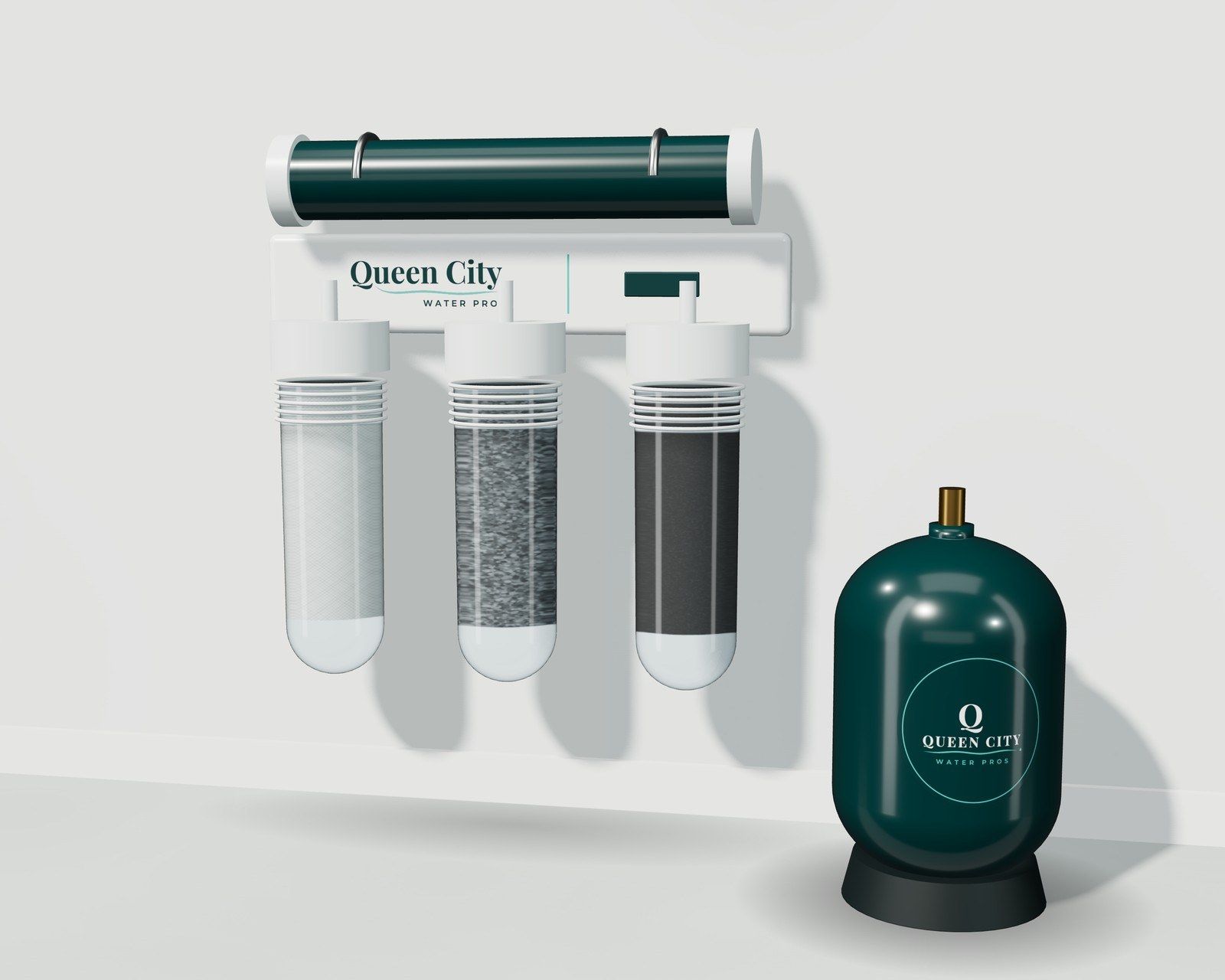
Your water passes through a few stages. First, a sediment filter and a carbon filter remove grit and chlorine or chloramine, which protects the membrane. Then household water pressure pushes the water through the RO membrane, a material so fine that dissolved minerals and many contaminants can’t pass. What gets rejected is rinsed down the drain.
The purified water collects in a small storage tank under the sink (or, on tankless models, goes straight to the faucet), then passes through a final carbon filter to polish the taste on its way to the dedicated faucet.
Because RO removes minerals, some people prefer a remineralization stage that adds a little calcium and magnesium back for taste. We’ll let you try the difference.
Follow the water through all five stages
Each filter in an RO system has one job, and each one protects the next. Pick a stage to see what it does.
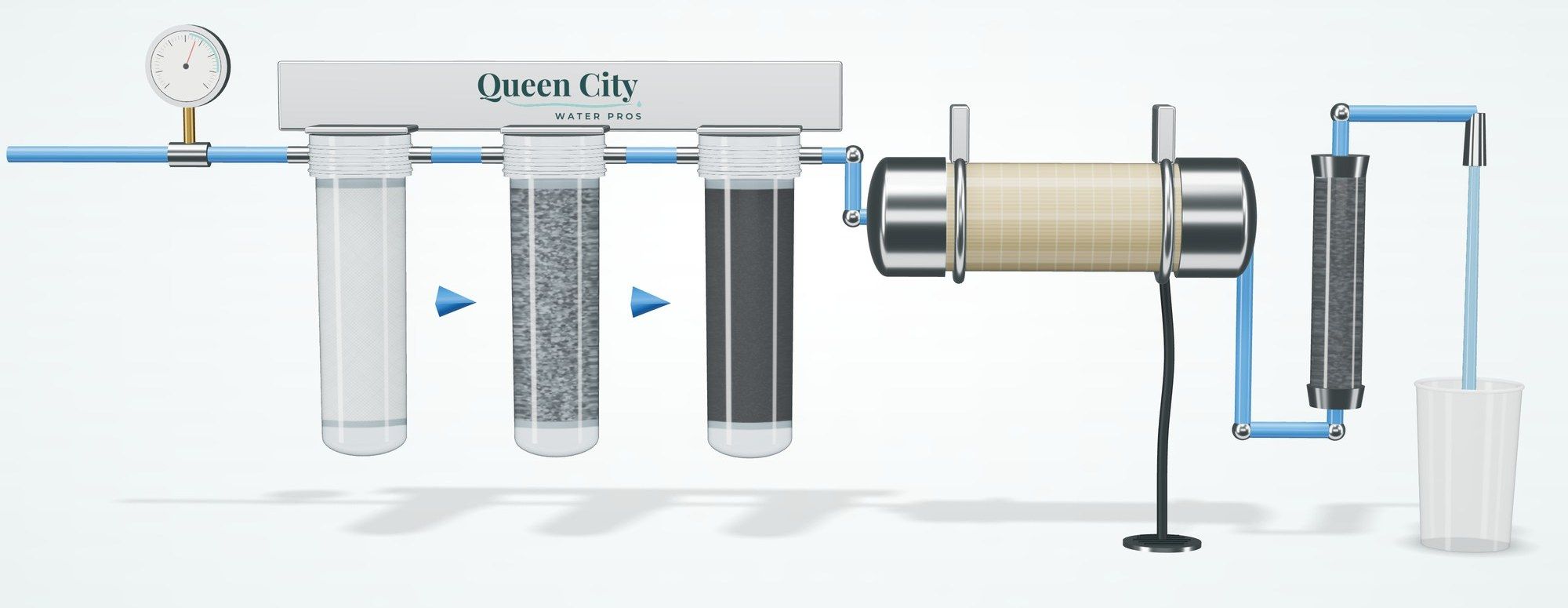
Swipe the picture to see the whole system.
Stage 1 of 5
Sediment filter
- What it does
- Traps sand, rust flakes, silt and other particles as water comes in.
- Why it’s there
- Grit clogs carbon filters and fouls the membrane. Catching it first helps every later stage last longer.
- Worth knowing
- It’s usually the filter that loads up fastest, so it’s first on the change schedule.
Stage 2 of 5
Carbon pre-filter
- What it does
- Granular carbon removes chlorine, chloramine and many taste and odor compounds.
- Why it’s there
- Chlorine and chloramine wear out RO membranes, so they have to come out before the water gets there.
- Worth knowing
- Charlotte Water disinfects with chlorine. Some nearby systems use chloramine, so we use catalytic carbon, which handles both.
Stage 3 of 5
Carbon block
- What it does
- A dense block of compressed carbon catches finer particles and whatever the first carbon stage let through.
- Why it’s there
- Two carbon stages give the membrane extra protection and the water a cleaner taste.
- Worth knowing
- On some systems this stage is combined with stage 2 in a single filter.
Stage 4 of 5
RO membrane
- What it does
- Household water pressure pushes water through a membrane fine enough to hold back most dissolved minerals and salts.
- Why it’s there
- This is the stage carbon can’t do. It’s what reduces total dissolved solids, fluoride, nitrates and many other dissolved substances.
- Worth knowing
- While it makes water, the membrane rinses what it rejects down the drain. How much depends on the model and your water pressure, and we show you the numbers for the model we recommend.
Stage 5 of 5
Polishing filter
- What it does
- A final carbon filter sits right before your drinking water faucet.
- Why it’s there
- It freshens the taste of water that’s been waiting in the storage tank.
- Worth knowing
- This is also where an optional remineralization stage can add a little calcium and magnesium back for taste.
Stages vary by model, and some systems combine two stages into one filter. Your written quote lists exactly what’s in yours.
What’s included
- A free water test, including total dissolved solids
- An under-sink RO system with pre-filters, membrane and post-filter
- A dedicated drinking water faucet, using an existing sink hole or a new one
- Drain and supply connections, and an ice maker or fridge line if you want one
- Testing after install to show the before-and-after difference
- A walkthrough and a filter schedule
City water or well?
City water
Great fitCity water is already disinfected; RO takes your drinking water a step further by removing dissolved solids and many trace substances.
Well water
Great fit, after testingRO is often the right tool for things like arsenic or nitrates at the drinking tap. Heavy iron or hardness may need treating first to protect the membrane.
Your options
Every option includes a dedicated faucet and professional installation.
Good
Standard RO
Multi-stage RO with a storage tank and a dedicated faucet.
Better
RO + remineralization
Adds back a little calcium and magnesium for a smoother taste.
Best
Tankless RO
Higher flow with no storage tank, freeing up cabinet space, plus filter-change alerts on many models.
Your exact price is in writing at your free test.
Get My Free Water TestMaintenance
Maintenance & filter changes- Pre-filters and the post-filter get replaced on a regular schedule.
- The membrane lasts longer than the filters but eventually needs replacing too.
- A total dissolved solids reading tells us when the membrane is slowing down.
- We track your schedule and can handle every change for you.
Reverse Osmosis questions
Straight answers. Anything else, ask during your free test.
Have a question that isn’t here? Ask during your free test.
More questions and answersDoes reverse osmosis remove fluoride?
Does an RO system waste water?
Can it connect to my fridge or ice maker?
Is it bad that RO removes minerals?
Do I need RO if I have whole-home filtration?
Start with a free water test and an upfront quote.
Tell us a little about your home and we’ll reach out to schedule your visit.
- Free and no obligation
- Results explained in plain English
- Written options with upfront prices
Book Your Free Water Test
Five quick fields. We’ll call or text to pick a time.